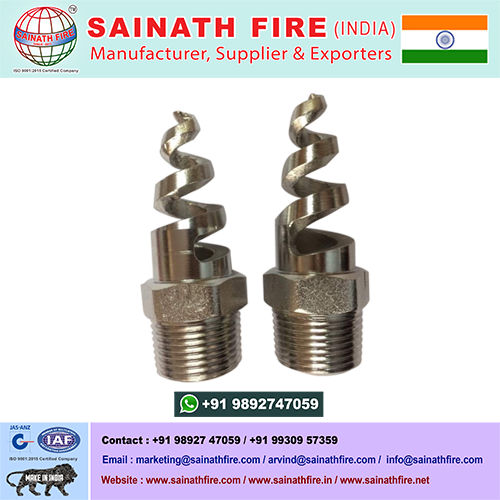
About Hollow Cone Spray Nozzles
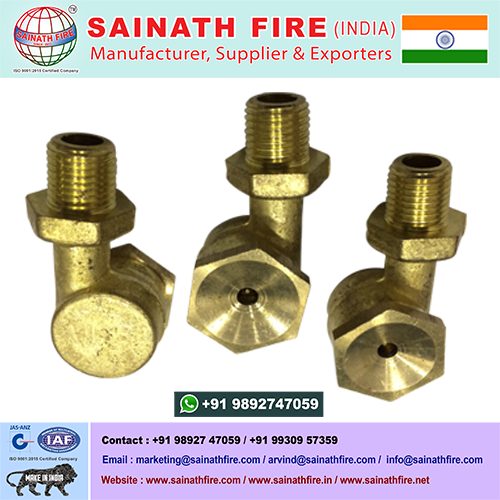
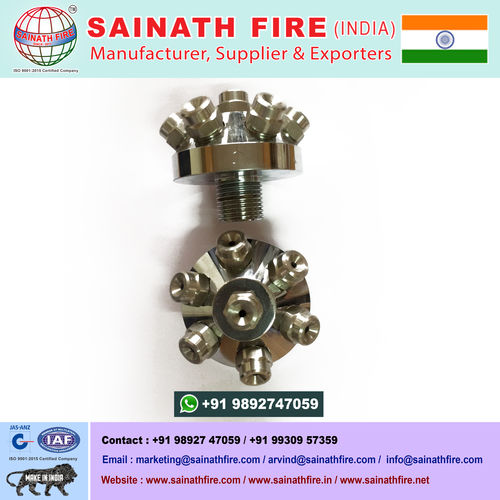
Hollow Cone Spray Nozzles
| Application | Degreasing, Scrubbing, foam Control Dust Control |
| Flow Rate | 1 LPM TO 2000 LPM |
| Pressure | 2.0 KG/CM2 |
| Spray Anngle | 45 Dedree |
| End Connection | 1/8 ,1/4 , , 3/4 ,1 , 1 to 4 BSP/BSPT/NPT |
| Material | SS 316, SS 304, Brass , PP, PTFE |
| | *And All Size Manufacturing. |
Fine Atomization with Versatile Spray AnglesHollow Cone Spray Nozzles produce uniform, finely atomized sprays, making them effective for applications demanding consistent coverage. With spray angles adjustable from 45 to 120, they provide optimized results for tasks such as gas scrubbing, cooling, and dust control in industrial environments.
Robust Construction for Demanding OperationsEngineered primarily from stainless steel or brass, these nozzles offer high impact and corrosion resistance, even in harsh chemical or industrial settings. Their polished and anti-corrosive surface treatments further increase durability and reliability, supporting temperatures up to 180C depending on the material.
Simplified Maintenance for Continuous PerformanceDesigned for hassle-free maintenance, these nozzles can be easily disassembled for thorough cleaning. This feature, along with their robust build and wide compatibility with BSP/NPT thread types, ensures prolonged operational efficiency and reduced downtime.
FAQs of Hollow Cone Spray Nozzles:
Q: How do hollow cone spray nozzles achieve fine atomization?
A: Hollow cone spray nozzles utilize a specially engineered internal geometry that forms a fine, hollow cone spray pattern, resulting in small droplet sizes ideal for uniform distribution in industrial spraying, cooling, and dust control processes.
Q: What materials are available for hollow cone spray nozzles and how does this affect their performance?
A: These nozzles are typically constructed from stainless steel, brass, or PVC. Stainless steel models provide excellent impact and corrosion resistance, making them suitable for harsh environments, while brass and PVC are options for less aggressive media.
Q: When should I select a particular spray angle or flow rate for my application?
A: The appropriate spray angle and flow rate depend on process requirements: wider angles (up to 120) offer broader coverage for applications like cooling or dust suppression, while narrower angles (around 45) suit targeted spraying. Flow rates from 0.5 to 45 l/min allow flexibility based on fluid volume needs.
Q: Where are hollow cone spray nozzles commonly installed?
A: These nozzles are commonly used in industrial environments such as chemical plants, cooling towers, fire suppression systems, dust suppression lines, and various process manufacturing settings across India and globally.
Q: What is the process of maintaining hollow cone spray nozzles?
A: Maintenance involves simple disassembly of the nozzle for cleaning or inspection, facilitating easy removal of any debris or build-up. This ensures consistent spray performance and extends the nozzles service life.
Q: What are the benefits of using hollow cone spray nozzles for industrial applications?
A: They provide efficient atomization, high operational reliability, flexible installation with BSP/NPT threads, and robust corrosion resistance. Their design supports easy maintenance, adaptability to different fluid viscosities, and superior performance in both high- and low-pressure systems.




 Send Inquiry
 Send Inquiry